
What material does this job need?
PLA-Pro, PETG and ABS/ASA, extruded on our own lines to ±0.02 mm. This page matches them to the jobs our customers actually print — and says plainly where each one is the wrong choice.
- ±0.02 MM TOLERANCE
- SDS PER MATERIAL
- ROHS STATEMENT
- REACH STATEMENT
Not sure which to test? Tell us the part and the load it takes, and we will recommend one.
Pick the job. The material follows.
Four jobs cover most of what our customers print. Each one names the material we would run, the material we would not, and the reason.
-
JOB
Shop tooling: jigs, fixtures, gauges
A fixture only earns its place if the part sits in the same position every time. Stiffness matters more than toughness here, and so does the diameter holding steady across a long print.
- USE
- PLA-Pro
- NOT
- PETG — softer and more ductile, so a fixture flexes under clamp load and the part it holds moves with it.
Shop tooling: jigs, fixtures, gauges — material specifications TENSILE 62 MPa PRINT TEMP 205–225 °C TOLERANCE ±0.02 mm  Ø ±0.02 mm
PLA-ProStiff, dimensionally stable, easy to run long. -
JOB
Functional brackets and fluid-adjacent parts
Parts that get handled, knocked, bolted down, or sit near a liquid line. What you want is a material that bends before it breaks and shrugs off a splash.
- USE
- PETG
- NOT
- PLA-Pro — brittle at the layer line. A bracket that takes a knock cracks instead of bending, and it fails without warning.
Functional brackets and fluid-adjacent parts — material specifications TENSILE 53 MPa PRINT TEMP 230–250 °C TOLERANCE ±0.02 mm 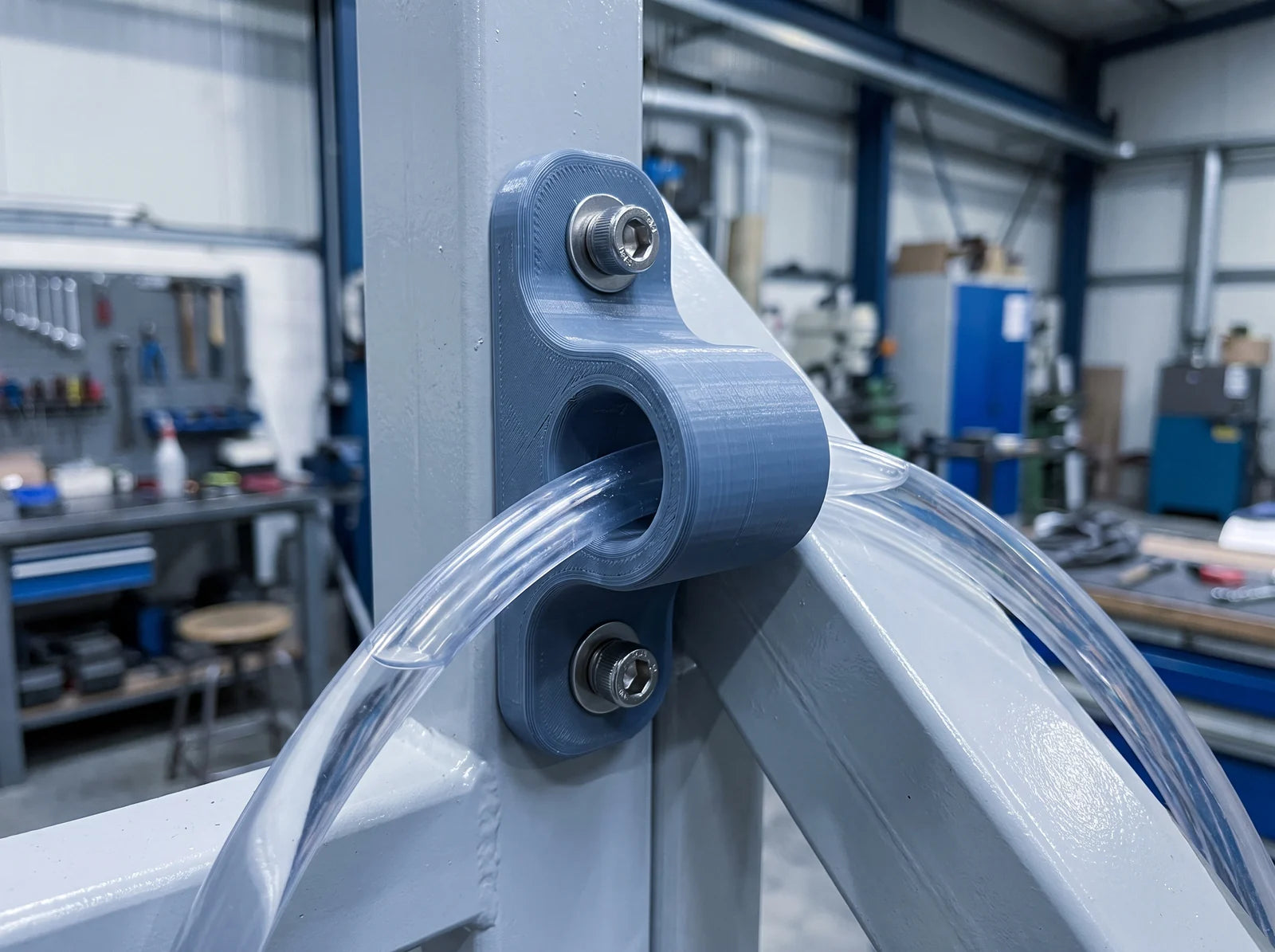
PETGTough, ductile, tolerant of chemicals. -
JOB
Outdoor housings and automotive clips
Anything that lives in sunlight or in a parked car. Heat and UV decide this one before mechanical numbers get a say.
- USE
- ABS / ASA
- NOT
- PLA-Pro — softens at temperatures a car interior reaches on a summer afternoon, and goes chalky under UV within a season.
Outdoor housings and automotive clips — material specifications TENSILE 46 MPa PRINT TEMP 240–260 °C TOLERANCE ±0.02 mm 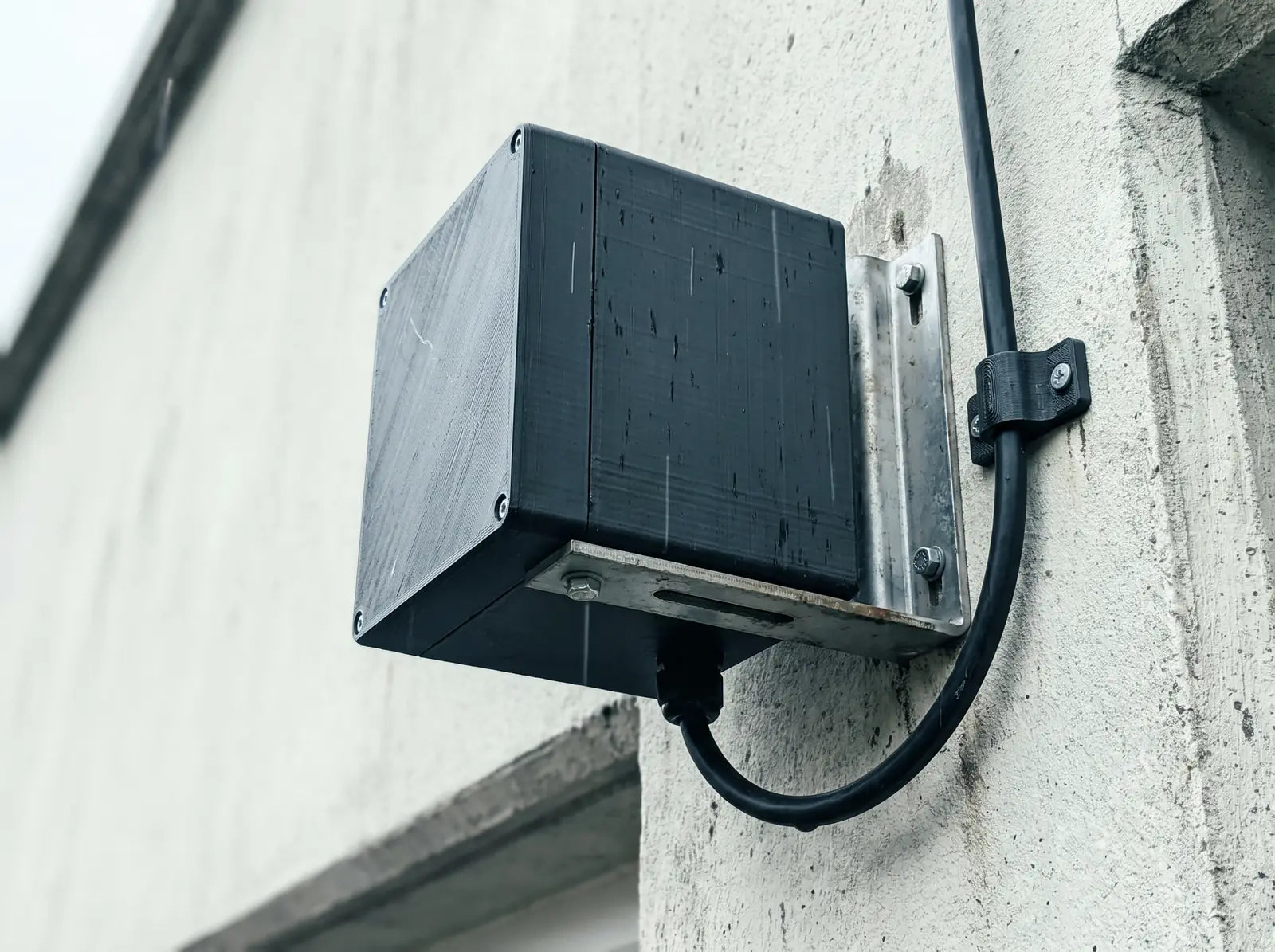
ABS / ASAHeat and UV resistant, built for outside. -
JOB
Print-farm production runs
Once a part is qualified, the material question stops being mechanical and starts being economic. What matters is that spool nine behaves like spool one, so a profile dialled in on Monday still holds on Friday.
- USE
- PLA-Pro, PETG, ABS / ASA
- NOT
- Mixed suppliers — every new source means re-tuning profiles and re-qualifying parts. We extrude on our own lines, so the material you re-order is the material you tested.
Print-farm production runs — material specifications TENSILE 46–62 MPa across the range PRINT TEMP 205–260 °C across the range TOLERANCE ±0.02 mm 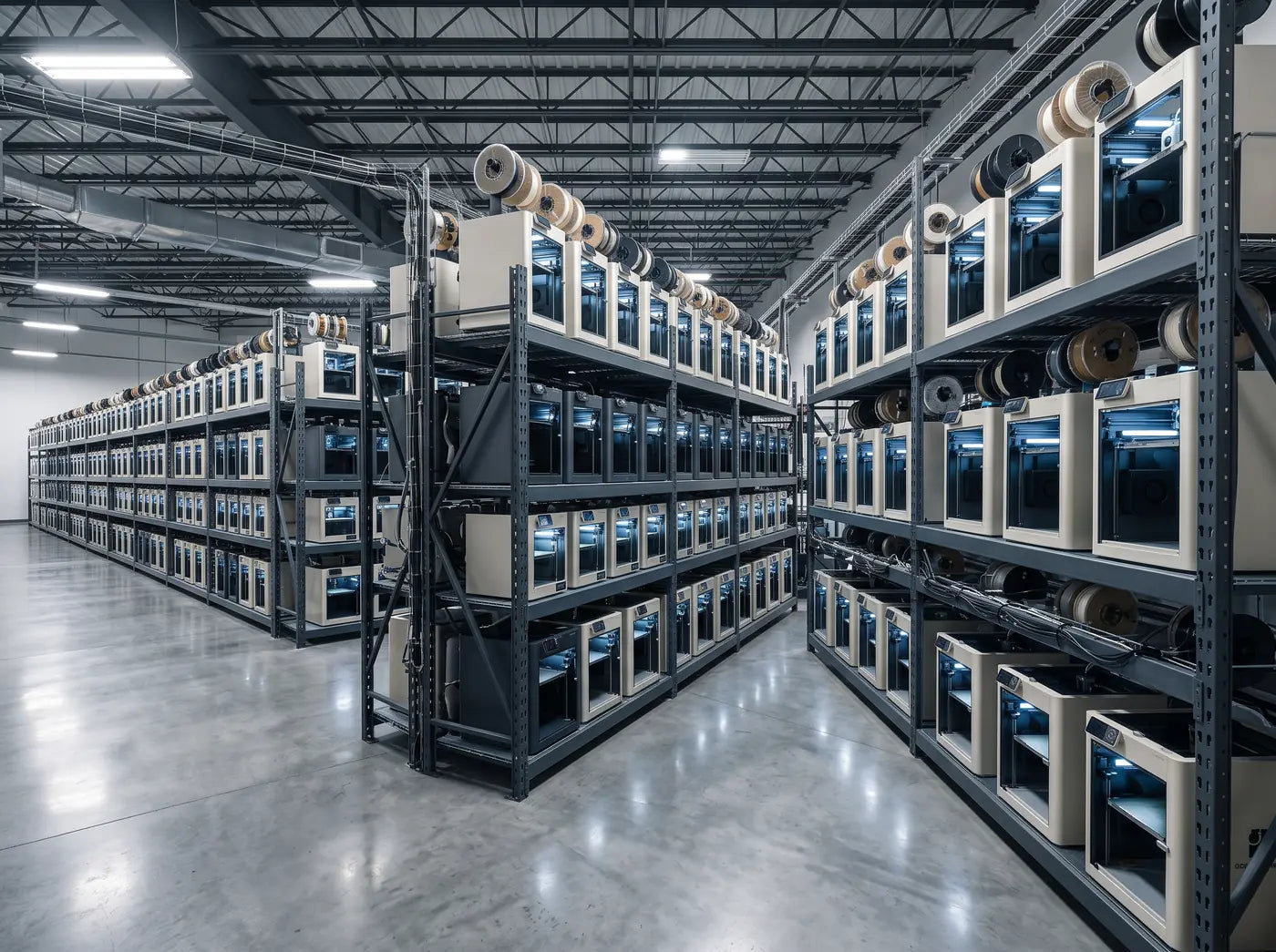
PLA-Pro, PETG, ABS / ASASDS, RoHS and REACH statements on request.

Three materials, published specs.
Everything above comes from these three. Full specifications, spool sizes and colors per material.
-
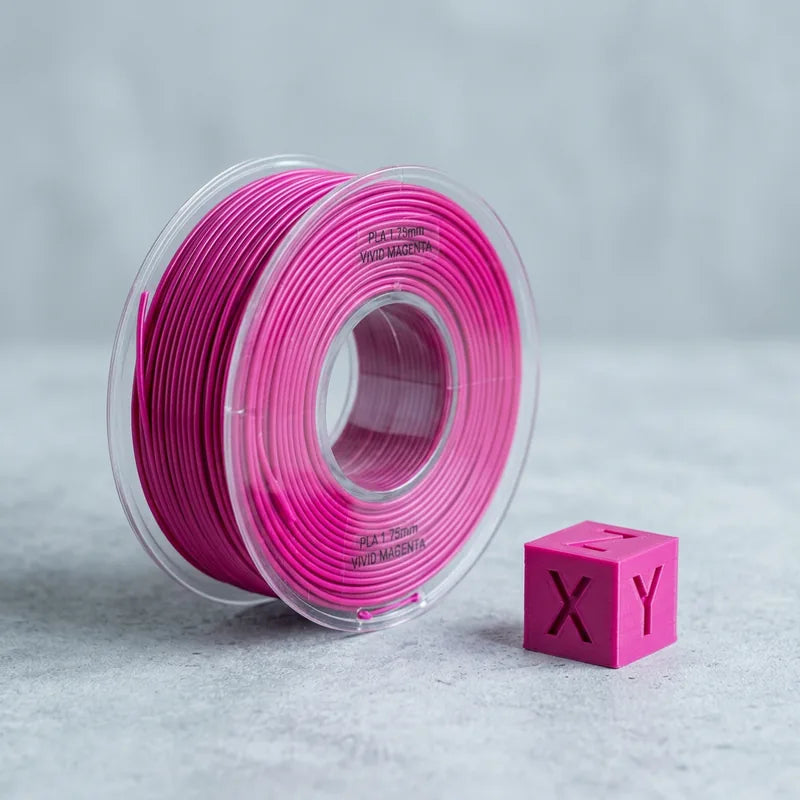
PLA-Pro
Jigs, fixtures, end-use enclosures
PLA-Pro key specifications TENSILE 62 MPa PRINT TEMP 205–225 °C SPOOLS 2.5 / 10 kg 8 colors
-
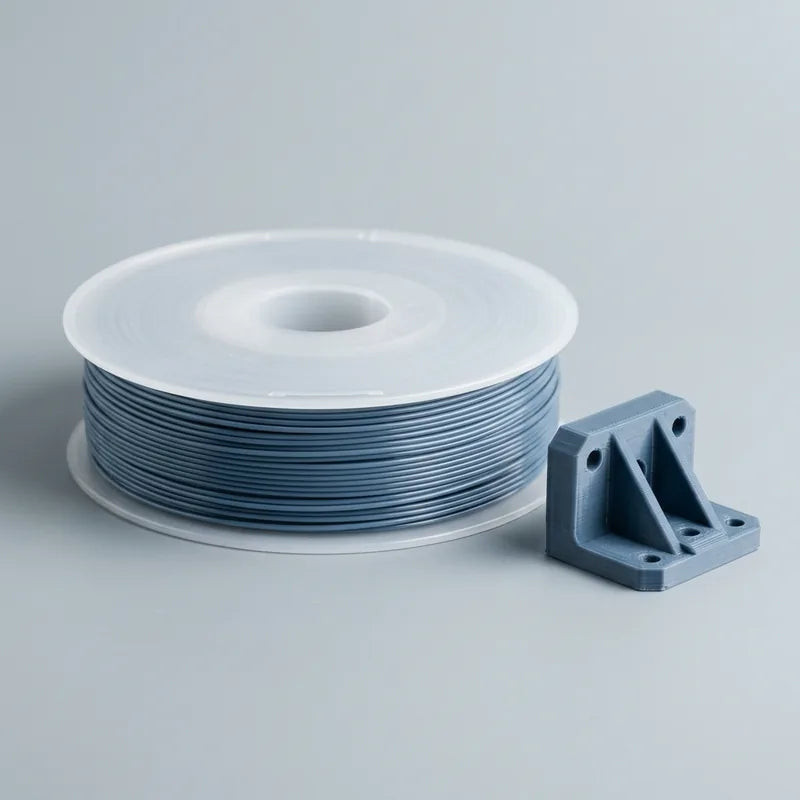
PETG
Functional brackets, fluid-adjacent parts
PETG key specifications TENSILE 53 MPa PRINT TEMP 230–250 °C SPOOLS 2.5 / 10 kg 6 colors
-
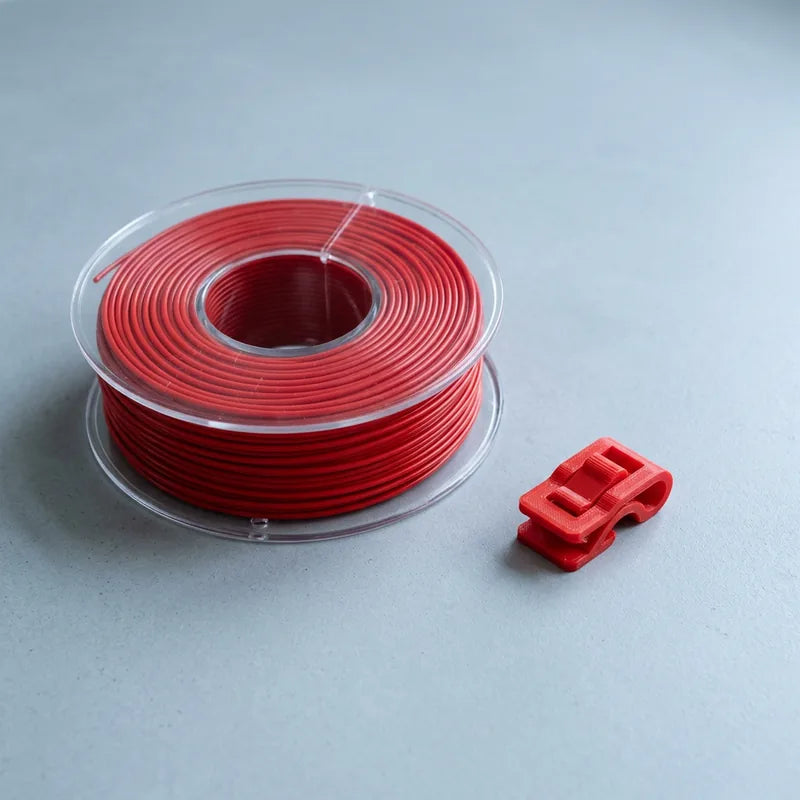
ABS / ASA
Outdoor housings, automotive clips
ABS / ASA key specifications TENSILE 46 MPa PRINT TEMP 240–260 °C SPOOLS 2.5 / 10 kg 6 colors
Documentation on request
- SDS · EVERY MATERIAL
- ROHS STATEMENT
- REACH STATEMENT
Choosing, answered.
How do I choose between PLA-Pro and PETG?
Ask what kills the part. If it fails by flexing, use PLA-Pro — it is the stiffer of the two at 62 MPa. If it fails by cracking when something hits it, use PETG at 53 MPa, which bends first. Tooling and fixtures go PLA-Pro; handled and bolted parts go PETG.
When is ABS / ASA worth the harder print?
When the part sees heat or sunlight. ABS and ASA hold up where PLA softens and where UV would chalk the surface within a season. It prints at 240–260 °C and wants an enclosure, so it is the right call for outdoor housings and automotive parts, and overkill for a desk bracket.
Do you sell carbon-filled or nylon filament?
Not today. We run PLA-Pro, PETG and ABS/ASA on our own lines. Filled materials need different tooling, and we would rather not sell a spool we cannot make to the same tolerance. Tell us what you need and we will say honestly when it becomes realistic.
What documentation comes with each material?
A safety data sheet for every material, plus our RoHS and REACH statements. These are producer documents, issued by us — ask and we will send them for any material on this page. They are not third-party certifications, and the difference matters when you are qualifying a supplier — see what documentation a filament manufacturer can actually provide.
How is the ±0.02 mm tolerance measured?
An inline laser gauge reads the strand on two axes continuously during extrusion. If either axis leaves ±0.02 mm the line stops automatically, so out-of-spec material is caught on the line rather than found in a spool. That same two-axis reading is where our ovality figure comes from. Moisture at sealing and color against an approved reference are checked on the same line, and every batch is test-printed to confirm it feeds and prints cleanly. That last check is a step on the line rather than a document — we do not issue certificates of analysis or per-batch test reports.
Test it before you commit.
SAMPLE PROGRAM
- One 1 kg spool per candidate material
- Credited against your first carton
- Shipped worldwide
WHAT YOU GET
- The material as it ships
- ±0.02 mm on the same lines
- SDS, RoHS and REACH on request
NEXT STEP
- Tell us the part and the load
- We recommend one or two to test
- Quote follows the test, not before